Special technical exchange conference on fluorine‑free & phenol‑free printing and dyeing solutions held in Shanghai
Apr 22, 2026 | by Zhong Mengxia
On April 15, during the 25th China Interdye Exhibition, the "Transfar · Special Technical Exchange Conference on Fluorine‑Free & Phenol‑Free Printing and Dyeing Solutions" was held in Shanghai. The conference was co‑hosted by the China Dyeing and Printing Association (CDPA) and Transfar Group. The meeting was narrated by Dong Shuxiu, Vice President of CDPA.
Li Lingshen, Vice President of the China National Textile and Apparel Council (CNTAC), noted in his speech that the 15th Five‑Year Plan period is critical for accelerating the green transition and building a beautiful China. He emphasized that printing and dyeing is a key link in textile processing and chemical usage. Accelerating fluorine‑free and phenol‑free processes and improving chemical safety management are essential for China’s carbon neutrality goals and for building a modern textile industry system. He called for: firstly, strengthening green foundations through technological innovation; secondly, enhancing supply chain resilience through collaboration; and last but not least, shaping competitive advantages through standard setting.
Xu Xun, Vice President of Transfar Group, stated that Transfar will continue to increase R&D investment to provide safer, more efficient, and environmentally friendly solutions, working with the entire industry chain to drive green transformation.
Xu Weilin, academician of the Chinese Academy of Engineering and Party Secretary of Wuhan Textile University, reported that his team has achieved efficient antibacterial effects using liquid ammonia finishing technology, developed eco‑friendly dyeing solutions with natural antibacterial and anti‑UV properties using plant‑based dyes, and successfully overcome key challenges in polyimide/cotton composites – increasing thermal insulation by 2.2–4.5 times with only 4% added weight, while maintaining excellent breathability and stain resistance.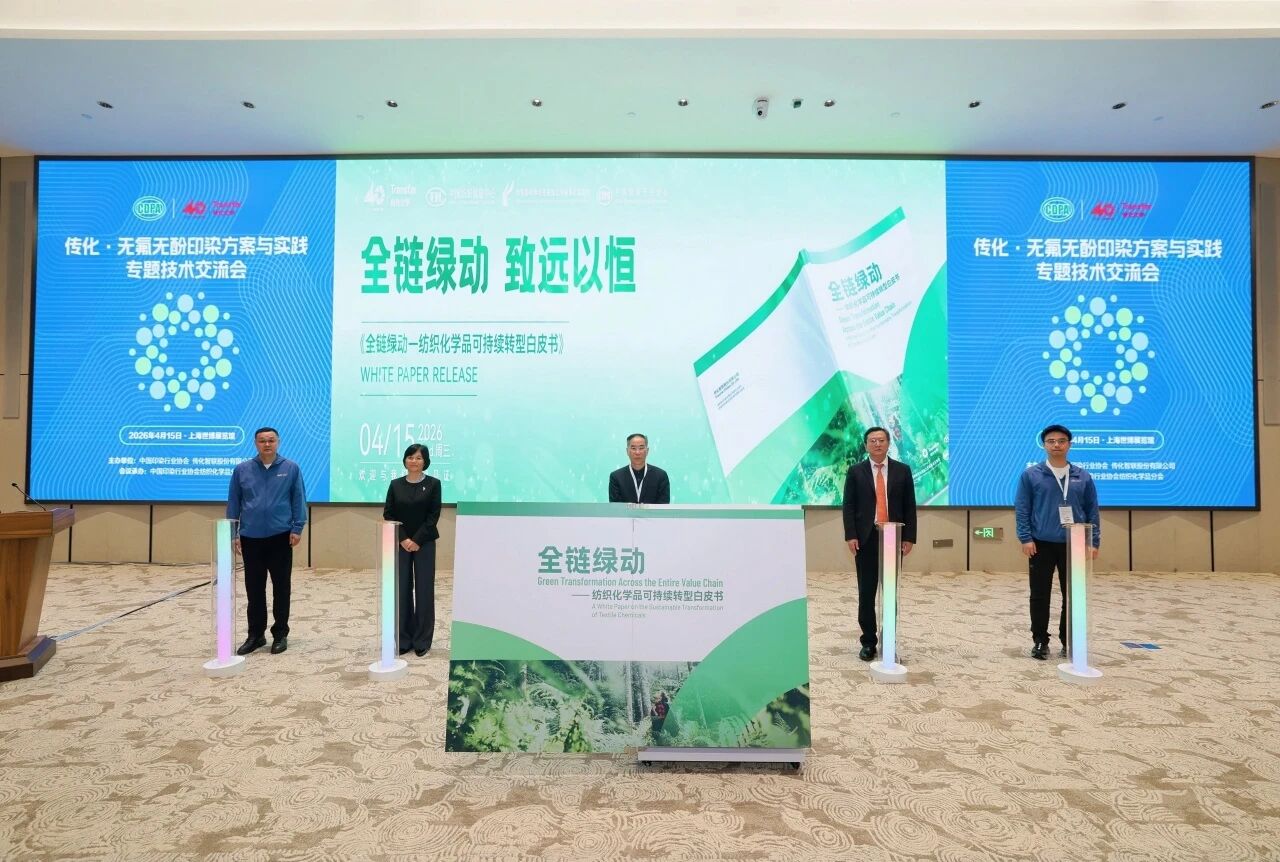
During the conference, the white paper "Green Chain Momentum – Sustainable Transformation of Textile Chemicals" was officially released. Jointly published by Transfar, China Textile Information Center, National Key Laboratory of Textile New Materials, and the Textile Chemicals Branch of CDPA, the white paper systematically presents best practices in sustainable transformation, offering a precious reference for the industry.
Jin Ze, Vice President of Textile Chemicals Business at Transfar, said that the white paper demonstrates the company’s commitment to social responsibility and platform‑based collaboration. He hopes to share the sustainable transformation platform with the industry, driving a green shift across the entire textile chemical value chain.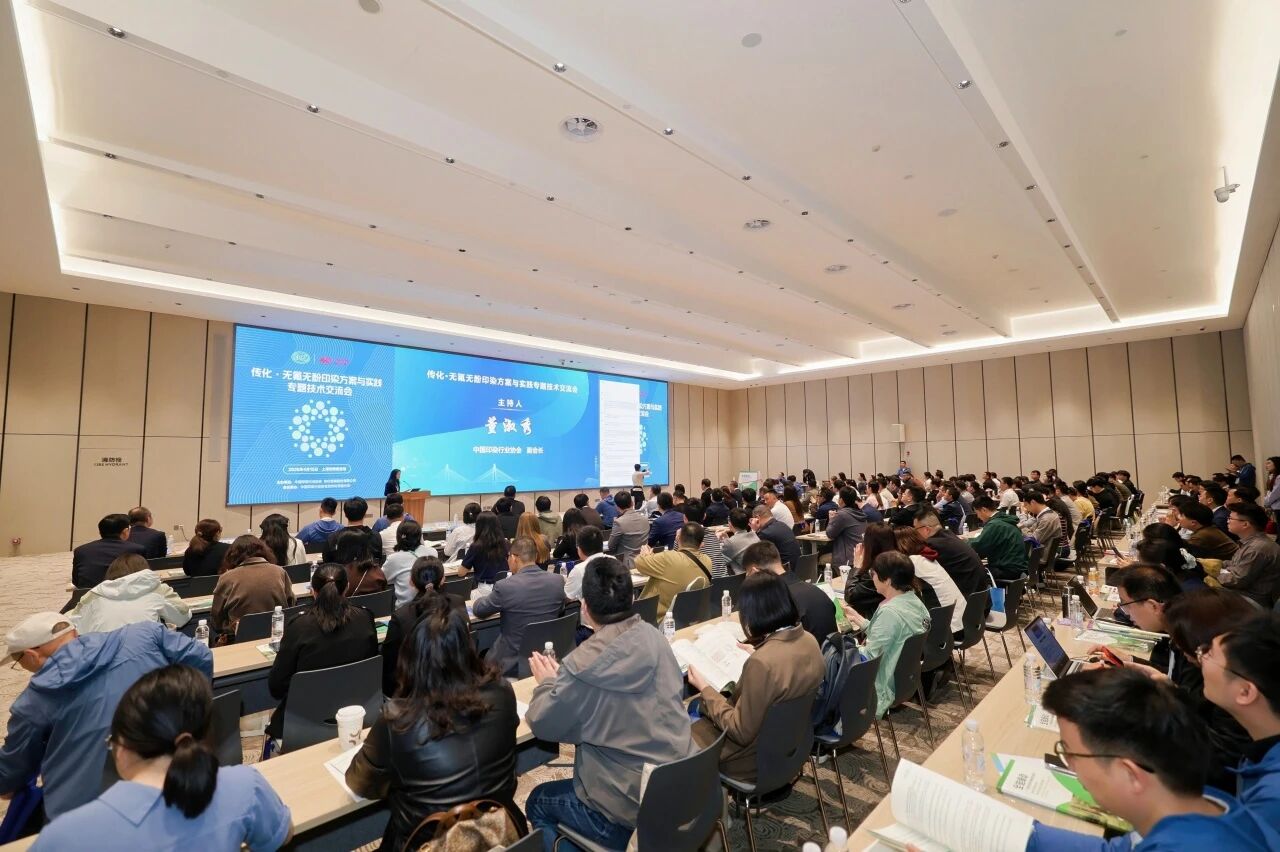
Mao Zhiping, Professor at Donghua University, shared insights on the development trends of the printing and dyeing industry, current status of auxiliaries, and process innovations driving auxiliaries reduction. He noted that future upgrades depend not only on new materials but also on process redesign based on fundamental principles, balancing quality, efficiency, and environmental protection.
Cai Linying, Fabric Development Director at SUPER NATURAL, stated that "eco‑chemicals are an investment, not a cost." Environmental protection does not have to be expensive. Green chemicals should keep costs within acceptable ranges of traditional solutions and offset added costs through process optimizations such as low‑temperature dyeing and short‑chain processing, making sustainability a standard feature rather than a luxury.
ALL COMMENTS