The 24th Technical Exchange Conference on new materials, new technologies, new processes, and new products in the printing and dyeing industry successfully held
Apr 16, 2026 | by Zhong Mengxia
On April 14, organized by the China Dyeing and Printing Association (CDPA) and the Printing Technology Professional Committee of CDPA, the "Runhe 24th Technical Exchange Conference on new materials, new technologies, new processes, and new products in the printing and dyeing industry" was grandly held in Shanghai.
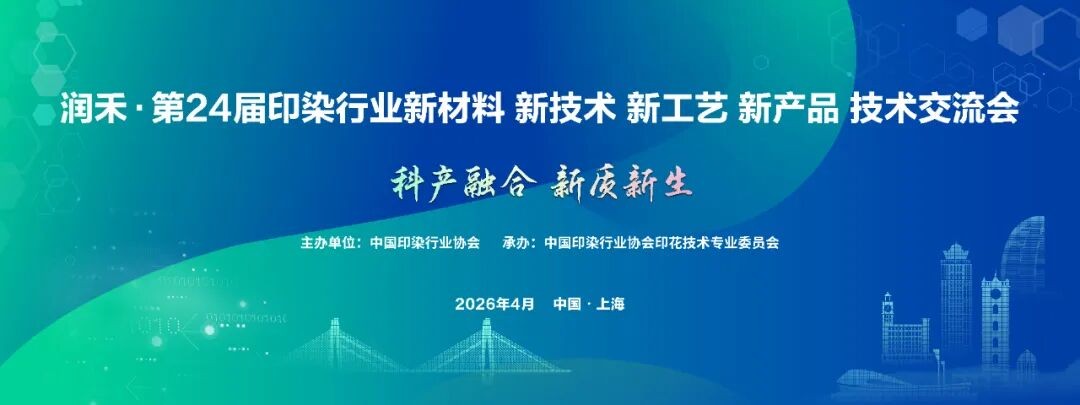
Under the theme "Integration of Science and Industry, New Quality and New Vitality," the conference focused on industry hot topics, cutting-edge trends, and future directions, exploring key common technological innovations, application of advanced processes, development of high-quality products, and the future path of the printing and dyeing industry.
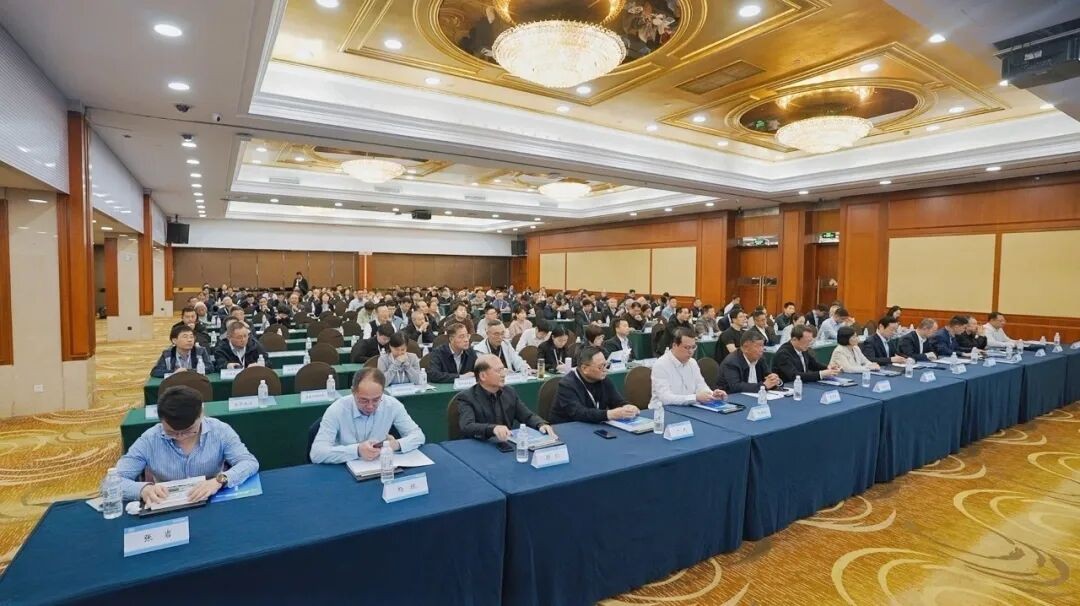
Li Ling Shen, Vice President of the China National Textile and Apparel Council (CNTAC), delivered a speech. He put forward three suggestions on how the printing and dyeing industry should deeply grasp the trends of the times and drive industrial innovation during the "15th Five-Year Plan" period: First, strive to build a full-chain innovation loop of "scientific research breakthroughs - pilot testing - industrial application - market feedback - iterative upgrading"; Second, focus on new materials, new technologies, new processes, and new products to continuously enhance product added value and market competitiveness; Third, the printing and dyeing industry must unswervingly pursue a path of green, intelligent, high-end, and integrated development.
Pan Shenhong, founder of TEA., stated that enterprises should be oriented toward customer needs, build products with unique product features, achieve precise fabric development, and reach consumers' real demands.
Ningbo Runhe High-tech Materials Co., Ltd. is a high-tech enterprise specializing in the R&D, production, and domestic/overseas sales of organic silicon deep-processing products and textile printing and dyeing auxiliaries. Yang Zhen, Director of its technology center, highlighted the design concepts behind the company’s polyamide-modified silicone oil series.
Driven by both the national fitness policy and the boom in outdoor sports, China's outdoor jacket market has seen rapid growth, now reaching a scale of RMB 28.7 billion. Zhang Yan, Senior Manager of Outdoor Footwear and Apparel Sourcing at JD Group, analyzed that the future trend for outdoor jacket fabrics lies in combining high performance with wearing comfort, continuously adapting to consumers’ cross-scenario needs.
In recent years, the demand for Lyocell fiber has increased year by year. Jiang Jianguo of Sateri Group proposed solutions to improve dyeing uniformity of Lyocell blended with cotton, linen, and wool.
Sun Li, Director of the Ningbo Key Laboratory of Textile and Garment Intelligent Manufacturing Technology, noted that differentiated materials or products with unique functions currently have significant competitive advantages. He suggested that enterprises should stay focused on consumer needs, expand markets through technological innovation, and enhance brand value.
Liu Xiaomin, R&D Manager of Huafang Co., Ltd., pointed out that the company has developed several fixing agents that significantly improve various colorfastness properties and dark-shade fixing effects.
Wang Junli, Deputy Chief Engineer of Shanghai Challenge Co., Ltd., systematically explained the path to enhancing fabric value through technological breakthroughs, including dyeing process optimization, application of multi-fiber blends, and digital-intelligent product development.
Digital printing and dyeing manufacturing based on industrial internet, big data, artificial intelligence, and digital twin technology has become a key direction. Gu Ren, Chairman and General Manager of Changzhou Hongda Smart Technology Co., Ltd., stated that the company is committed to developing AI-based finishing machine smart systems, fabric inspection systems, and dyeing machine smart systems, providing pathways for industry transformation and upgrading.
Liu Ping, Deputy Manager of Product Development at the Global Fabric R&D Center of Shanghai Jiale Co., Ltd., elaborated on the development ideas for sports and leisure fabrics from the dimensions of raw material selection, fabric structure innovation, and key dyeing and finishing technologies, with a special focus on the technical application and industrialization of sweat-hidden fabrics.
Yan Yong of Guangdong Dymatic Chemicals Inc., focused on common core pain points in the production of nylon-spandex fabrics and proposed a full-chain solution covering degreasing, dyeing, fixing, and functional finishing.
TTK's self-developed bio-based microporous membrane technology uses nano-scale microporous structures and bio-based materials as the core raw material, achieving a combination of environmental protection and high performance. Wang Zhentao from Suzhou TTK Textile Technology Group Co., Ltd., introduced that the membrane has excellent performance indicators while also featuring high temperature resistance, softness, and elasticity.
Driven by global carbon neutrality strategies and the EU Green Deal, fluorine substitution has become an industry necessity. Le Xiang of Transfar Functional Chemicals Waterproofing Division pointed out that future fluorine-free water repellents will evolve toward bio-based waterproof technology, nano-enhanced surface modification, and hyperbranched polymerization structures.
Chen Congcong of Zhejiang Lan Tian Hai Textile and Apparel Technology Co., Ltd., noted that the workwear fabric industry is undergoing three major transformations in standards, demand, and green production. Blue Sky continues to ensure quality through patents, standards, and dual guarantees, providing safe, healthy, and comfortable high-end workwear fabrics for industrial workers.
Lyu Jianglong, Product Director of Dawne Biotechnology Co., Ltd., addressed the demand trend for hydrophilic nylon-spandex fabrics and pain points in moisture-wicking and quick-drying fabrics, proposing solutions for nylon fabrics with poor wash-resistant and long-lasting hydrophilic effects.
Led and promoted by domestic and international brands, the concepts of circular, low-carbon, and sustainable development are profoundly reshaping the textile printing and dyeing industry. Qiu Binhong, Deputy General Manager of the Green Environment Department at Intertek Group, said that as an authoritative third-party organization, Intertek fully supports textile enterprises in compliance upgrades, enhancing market competitiveness, and seizing new opportunities in sustainable development.
Li Junxian, R&D Manager of Suntion (China) Group, pointed out that high-elasticity nylon-spandex sportswear fabrics are currently in a high-quality development stage featuring both technological upgrading and green transformation. With consumption upgrades and technological advances, nylon-spandex fabrics are evolving from basic elasticity to functional comfort + green sustainability, offering broad future development space.
Pan Weicheng, Textile Printing and Dyeing Industry Director of Hangzhou Supmea Automation Technology Co., Ltd., shared instrumentation solutions integrating real-time monitoring, intelligent analysis, and instrument clouding, focusing on typical scenarios such as precise temperature control and energy saving in dyeing processes, and efficient water saving in washing processes.
ALL COMMENTS