Driven by AI and green consumption, the 2026 Wipes Summit & Hygiene Products Industry Exchange explores industry transformation
Mar 25, 2026 | by Zhong Mengxia
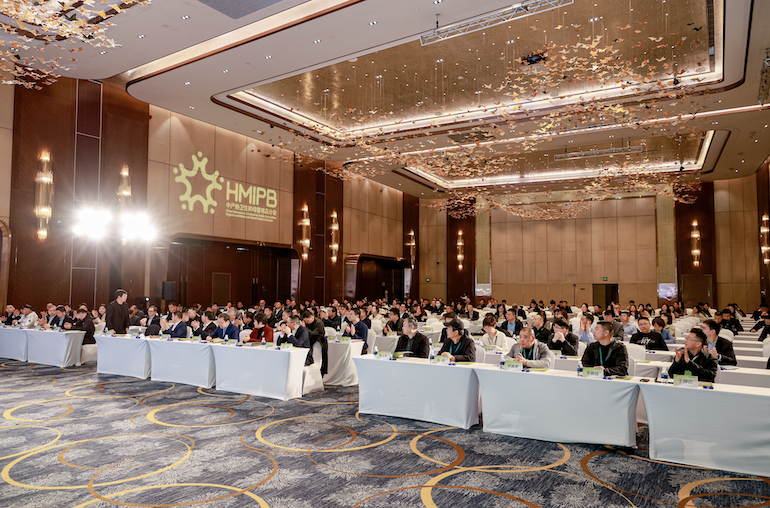
On 9-10 March, the 2026 Wipes Summit & Hygiene Products Industry Exchange was held in Shanghai. Under the theme ‘Forward Together’, the event comprised three components: speeches, roundtable discussions, and display and business matching session. It aimed to address the industry’s key challenges and opportunities, pool global expertise, and inject new energy into value creation, efficiency gains and high-quality development within the wiping materials and hygiene products sectors.
High-level perspectives
“Technology, fashion, sustainability and health” represent the future development goals for China’s textile industry, with wiping materials and hygiene products serving as key bridges linking material technology with public needs and people’s health and well-being. In his opening address, Li Lingshen, Vice President of China National Textile and Apparel Council (hereinafter refered to as CNTAC), noted that the wiping materials and hygiene products sector is currently at a critical juncture, transitioning from “scale expansion” to “value enhancement”, with products undergoing a comprehensive upgrade from basic functionality to health, comfort, customization and intelligence. The sector faces multiple challenges, including raw material optimization, product safety, environmental compliance and value chain upgrading, whilst also embracing strategic opportunities such as AI empowerment, green consumption and cross-industry integration. Li put forward the following recommendations: first, to prioritize quality and uphold the industry’s founding principles; second, to harness innovation to break through development bottlenecks; third, to focus on consumer demand to create new market opportunities; and fourth, to pursue mutual benefit to chart a green blueprint.
Yan Huarong, President of Health and Maternal & Infant Products Branch of China Nonwovens & Industrial Textiles Association, Director of the Preparatory Committee for the Exchange Meeting, Chairman of Kingsafe Group, pointed out that the global wiping materials industry is currently at a critical stage of transformation and upgrading. Driven by both consumption upgrades and heightened health awareness, the industry is accelerating its transition from ‘basic necessities’ to ‘quality living’. He shared his insights into the logic of the industry’s development: firstly, to capitalize on the momentum by seizing the opportunities presented by consumption upgrades and industrial transformation to promote industry-wide collaboration and mutual benefit; secondly, to build consensus by integrating resources to create a symbiotic and mutually prosperous industrial ecosystem, thereby enhancing the sector’s overall resilience and global competitiveness; and thirdly, to use innovation as an engine to lead the industry into new markets and pioneer new directions.
Macro analysis
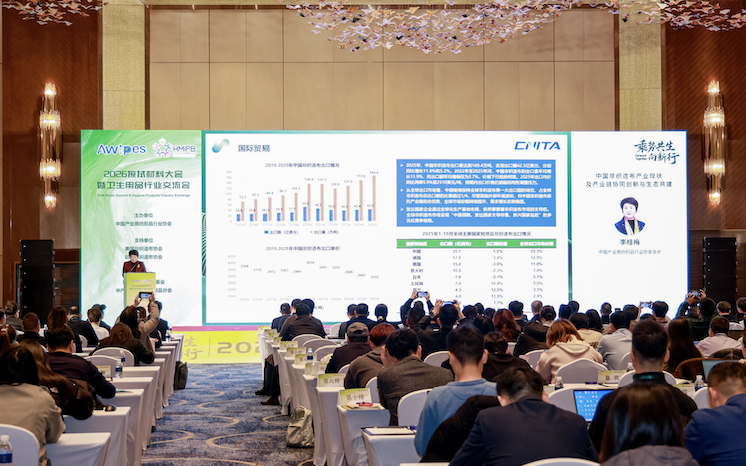
Li Guimei, President of China Nonwovens and Industrial Textiles Association (hereinafter refered to as CNITA), provided a comprehensive analysis of the current state of development, innovative practices and future prospects of China’s nonwoven industry, systematically outlining the application scenarios, cutting-edge technological breakthroughs and key innovation directions for nonwoven materials. Regarding future industry trends, she analyzed them from four core dimensions: firstly, technological innovation is the core driving force behind industrial upgrading; secondly, the industry’s future development trends lie in high-end technology, diversified functionality and intelligent product development; thirdly, moderate growth has become the new normal, with tier-two and tier-three markets and niche segments jointly ushering in a new growth cycle; and fourthly, green manufacturing and smart manufacturing will move from isolated breakthroughs towards collaboration across the entire industrial chain.
Chen Hongjun, former Deputy Director, Standardization Administration of China (SAC); former Deputy Director General (Director General level), Department of Standards and Technology Management, State Administration for Market Regulation (SAMR), pointed out that China is accelerating the construction of a new standardization system characterized by the coordinated development and complementary integration of government-led and market-driven standard-setting. In addition to domestic standards, enterprises should also pay close attention to international standards and developments within international standardization organizations such as ISO, IEC and ITU.
Ling Yun, special researcher of the Zhejiang Provincial People’s Government Deputy Director of the Smart Manufacturing Expert Committee of the Zhejiang Provincial People’s Government outlined the trends in artificial intelligence applications. Addressing the key question of ‘how to accelerate the capture of a leading position in the industrial application of artificial intelligence’, he argued that, first, we must emphasize application-oriented approaches and strengthen demonstration and leadership; second, we must create typical application scenarios for ‘AI + Manufacturing’; and third, we must focus on fostering a favourable ecosystem for ‘AI + Manufacturing’.
Zhong Yan, an expert in macroeconomics and policy research, pointed out that China possesses numerous favourable conditions to proactively navigate the international arena and shape the external environment.
Market outlook
Zhao Yingming, visiting professor at Cheung Kong Graduate School of Business (CKGSB) , former Vice President of JD.com, emphasised that embracing trends is the only option in times of change, noting that offline channels rely on physical space to improve matching efficiency, whilst online channels rely on time to achieve the same.
Tony Fragnito, President of the INDA, provided an analysis of the current challenges and opportunities facing the industry, focusing on the current state of the North American wipes market, supply and demand dynamics, product evolution and development trends, whilst also considering the global wipes market as a whole. Wipes currently account for 11% of the North American market, and their market share is expected to surpass that of other nonwoven categories over the next five years.
Wu Zhicong, Alibaba's retail tissue operating manager, stated that traditional items such as toilet tissue have entered a mature phase in the online paper products market, with relatively slow growth rates; meanwhile, demand for niche categories such as scenario-specific wipes, facial wipes, and kitchen tissues is growing rapidly, and there is significant scope for market penetration to increase.
Yao Jia, Smithers information director of Operations for Asia, provided some key figures: the global wipes market is projected to grow at an average annual rate of 5.6% (by tonnage) between 2025 and 2030. Sustainability and the move away from plastic remain the primary drivers of the wipes market, but cost issues are set to become a prominent concern by 2026.
Xiao Feng, senior category manager of Household Cleaning & Paper Products, JD.com, explained that consumers are no longer satisfied with ‘a single sheet of paper solving all problems’. Cleaning paper products are shifting from a ‘one-size-fits-all’ approach towards ‘specialized and refined’ offerings. He noted that quality is the foundation of repeat purchases, and that the future direction of product development lies in the segmentation of usage scenarios and the targeting of specific consumer groups.
Zeng Hao, Head of Home Cleaning Industry Operations at Douyin E-commerce, shared that in 2026, Douyin e-commerce will focus on operational efficiency: driving new growth through new supply, boosting transactions with high-quality content, achieving operational efficiency through advertising, and continuously driving industry sales growth by upgrading the ‘Better Life Series’ marketing system.
Cheng Xiaoma, CEO of Inspiration Consulting, stated that in the face of saturated traffic in e-commerce channels, brands need to build three key competitive advantages: product innovation, the effective alignment of content and traffic, and the long-term cultivation of brand awareness.
Technical exchange
What constitutes an ideal sustainable material? Yan Hui, Senior Marketing Manager at Sateri Group, pointed out that, thanks to the booming dry and wet wipe markets, China’s spunlace production has grown steadily over the past five years, whilst the market penetration of flushable toilet wipes has increased year on year. In the face of global microplastic pollution and the EU’s plastic-free regulations, Lyocell fibre can provide sustainable material solutions for the wiping industry.
Luo Haitao, technical and process expert from ANDRITZ (China) Co., Ltd., noted that environmental awareness has become a key driver for the industry, and sustainability is no longer merely an option. He emphasised that Andritz possesses a comprehensive range of bio-based wet wipe production solutions, capable of providing the industry with integrated, end-to-end technical support.
Bi Lijun, Senior Brand Manager at Tangshan Sanyou Group Xingda Chemical Fiber Co., Ltd., introduced the TangCell product ecosystem, which centres on low-carbon, environmental protection and circularity.
What kind of production line do you need? Michelle Zhao, head of Trützschler China Marketing, shared that the upgrading of consumer demand is accelerating the industry’s transition from ‘adequate’ to ‘high-quality’. For equipment manufacturers, production lines offering high quality, high added value, high output and high yield rates present significant profit margins.
Gan Yi, R&D Director of Henan Yixiang Health Technology Co., Ltd., stated that non-woven fabric is the core substrate for wipes. Currently, per capita spending on wipes in China stands at just US$2.40, far below the US$17 in the United States, indicating enormous potential for market growth.
Tian Xiaohui, Deputy General Manager Uniquality Nursing Products Technology Co., Ltd., drew on typical case studies and global new product data to analyze in detail how future wet wipe products will follow a systematic innovation path that prioritises transparency, safety and precise efficacy.
Zhang Shuai, Vice General Manager of Jiangxi Pengcai New Material Technology Co., Ltd., analyzed current industry pain points in wipe packaging, such as fluctuations in adhesion, temperature sensitivity and poor labeling, and proposed achieving synergy between film, labels and flexible packaging through vertical integration, thereby ensuring full process control from base material to finished product.
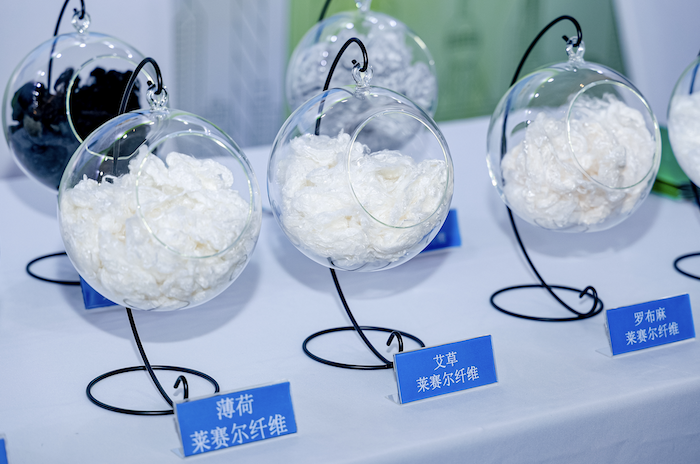
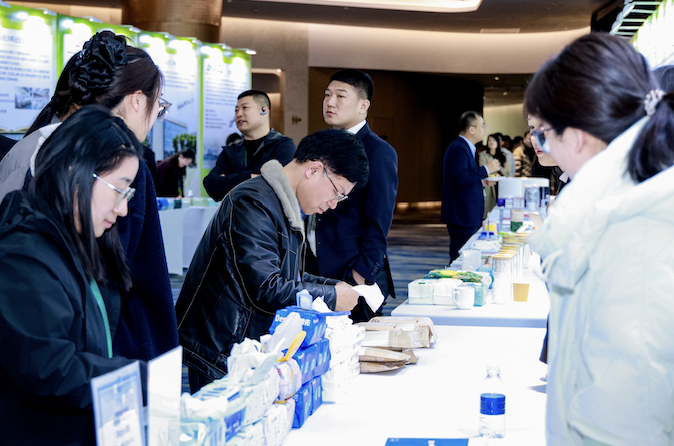
During the conference, three roundtable forums were held in quick succession under the themes of ‘Seizing the Momentum, Moving Forward’, ‘Symbiosis, Smart Action’ and ‘Green, Moving Towards the Future’. Fourteen corporate representatives engaged in discussions. A dedicated area for business matching and technical exchange was set up, showcasing the latest technologies and products from enterprises across the entire wiping materials supply chain.
ALL COMMENTS