The 2025 version of CSC9000T has been released, using the power of responsibility to chart a new blueprint for high-quality industrial development
Dec 05, 2025 | by
On November 28th, the launch conference and industry exchange seminar on the "CSC9000T Social Responsibility Management System for Textile and Apparel Enterprises (2025 Edition)" was grandly held in Beijing.
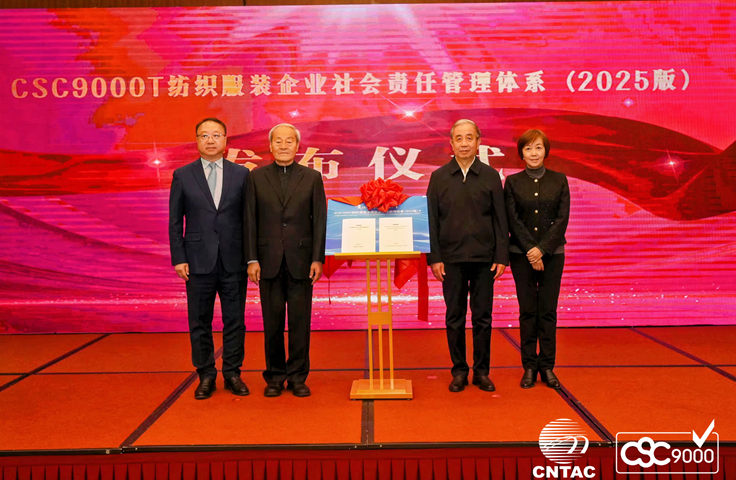
Du Yuzhou, former president of the China National Textile and Apparel Council, and Chen Shujin, former vice president, as well as Sun Ruizhe, Secretary of the Party Committee and President of the China National Textile and Apparel Council, and Vice President Yan Yan, witnessed the release of "CSC9000T 2025".
This conference, centered on the theme of "Leading with Responsibility, Creating a Shared Future," officially released the "CSC9000T Textile and Apparel Enterprise Social Responsibility Management System (2025 Edition)" (hereinafter referred to as CSC9000T (2025 Edition)). The CSC9000T (2025 Edition) continues to utilize the basic structure of "management system + code of conduct," emphasizing process management, responsible management, and sustainable innovation-based management, forming a dynamic and collaborative management framework.
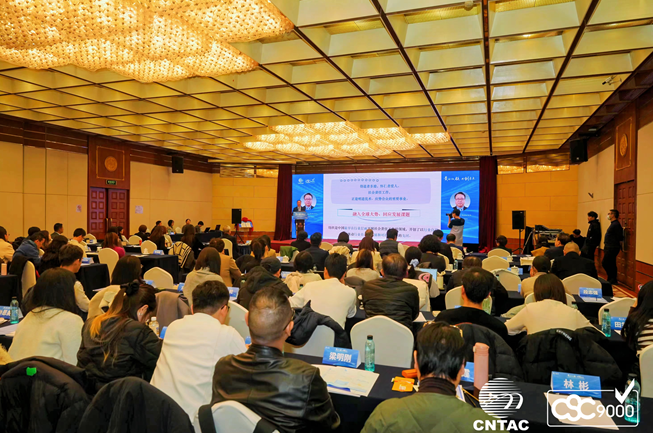
Sun Ruizhe, Secretary of the Party Committee and President of the China National Textile and Apparel Council, former President Du Yuzhou, Vice Presidents Li Lingshen and Yan Yan, and other leaders, discussed the path of responsible development and the blueprint for industrial upgrading, injecting strong momentum for the high-quality development of China's textile industry.
This year marks the 20th anniversary of the CSC9000T system. For two decades, CSC9000T has guided the industry towards positive and ethical development, becoming a distinctive symbol and hallmark of the textile industry. The textile industry was one of the first sectors in China to carry out social responsibility work at the industry level, establishing the first permanent social responsibility promotion organization – the Social Responsibility Office of the China National Textile and Apparel Council (referred to as the Social Responsibility Office) – pioneering a model of industry self-regulation to promote responsible development and sustainable governance.
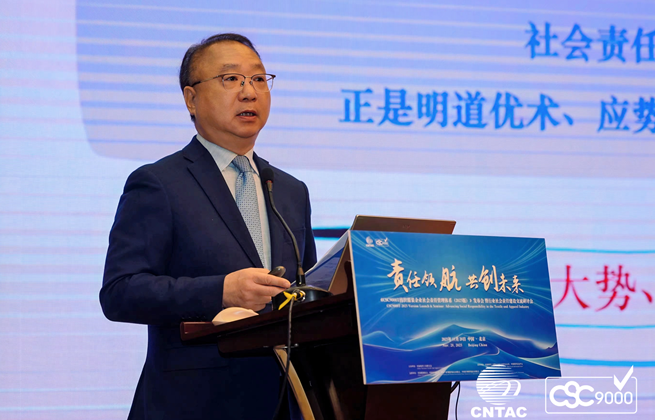
Sun Ruizhe pointed out that the "15th Five-Year Plan" period is a crucial period for laying the foundation and making comprehensive efforts to basically achieve socialist modernization. Social responsibility construction is undoubtedly a core value running throughout this period and a key guiding principle for the industry to achieve "technological, fashionable, green, and healthy" development.
Sun Ruizhe offered three suggestions regarding corporate social responsibility: First, focus on development and improve the governance system. Promote the deep integration of social responsibility with corporate development, integrate the responsibility system into decision-making and performance processes, build a value co-creation mechanism, empower employees by protecting their rights, create an honest and fair environment, and meet people's needs with high-quality products. Second, reshape the industrial ecosystem. Promote the transformation of green responsibility into a competitive advantage, deepen the integrated application of green development and digital technology throughout the entire industrial chain, improve the green standard system, and guide enterprises to conduct environmental information disclosure and green certification. Third, embrace openness and expand the global landscape. Support high-level opening up with high-level responsibility, actively align with international rules, deepen international responsibility dialogues, and work together with all parties globally to promote collaborative responsibility in the supply chain and jointly build a safe and resilient industrial system.
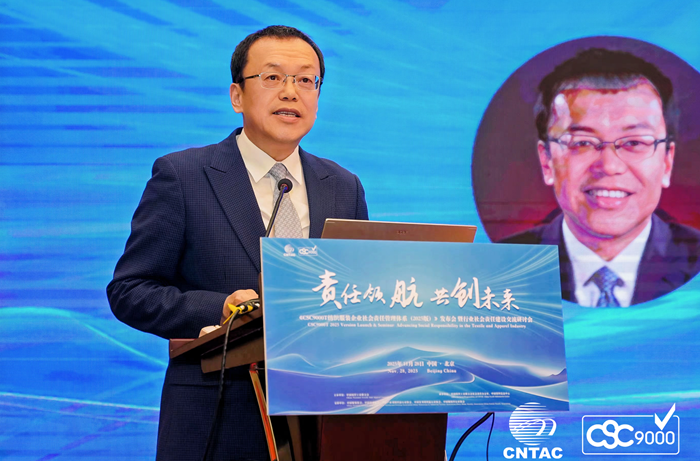
Li Lingshen, Vice President of the China National Textile and Apparel Council, offered three suggestions regarding corporate social responsibility in his speech. First, standards should guide and facilitate integration. Companies need to adapt to diverse cultural environments and stakeholder needs, actively participate in the development of global sustainability standards, and systematically integrate relevant requirements into corporate governance and decision-making processes. Second, promote the solid implementation and effective operation of social responsibility management systems within enterprises through goal optimization, training, tool development, and the promotion of best practices, thereby transforming the concept of sustainable development from a marginal philanthropic initiative to a core corporate strategy. Third, collaborative governance should create shared value. The China National Textile and Apparel Council will continue to promote social responsibility throughout the entire supply chain, building a transparent, trustworthy, and responsible value community, enhancing the global competitiveness and soft power of China's textile and apparel industry, and supporting brand globalization.
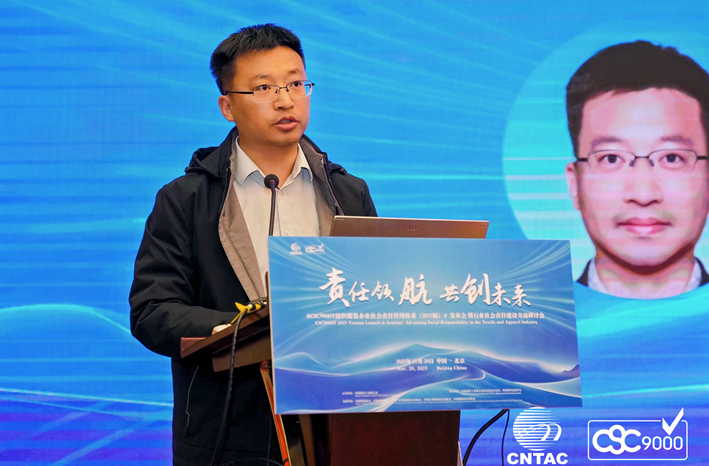
Zhang Ningning, Director of the Comprehensive Division of the Department of Industrial Policy and Regulations at the Ministry of Industry and Information Technology, stated that the textile industry's social responsibility construction has "started early, progressed steadily, gained a strong reputation, and achieved good results". To better promote the social responsibility construction of enterprises in the industry, Zhang Ningning offered three suggestions: First, leverage the role of industry organizations as a link, strengthen self-regulation and thematic activity guidance, and promote high-standard responsibility practices throughout the entire process of enterprises; second, enhance the influence of Chinese standards, participate in international standard setting and mutual recognition, and transform industrial advantages into rule advantages; and third, build a multi-party collaborative industrial ecosystem, with leading enterprises driving small and medium-sized enterprises to deepen their practices, improve the responsibility system throughout the entire industrial chain.
CSC9000T was born during a critical period when China was integrating into the global economic system. From its initial establishment in early 2005 with a core framework of "management system + code of conduct," and through successive revisions in 2008 and 2018, CSC9000T has evolved from focusing on protecting workers' rights to becoming a comprehensive standard system covering three major areas of responsibility: people, environment, and market.
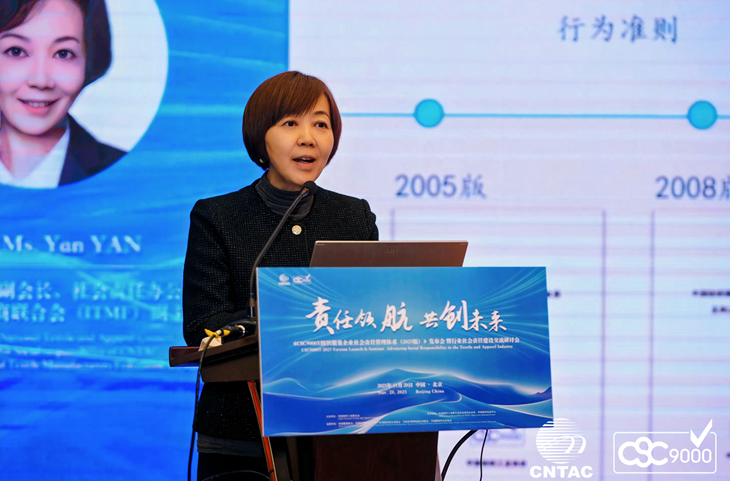
Yan Yan, Vice President of the China National Textile and Apparel Council, Director of the Social Responsibility Office, and Vice President of the International Textile Manufacturers Federation, mentioned that in recent years, the Social Responsibility Office of the China National Textile and Apparel Council has innovated and promoted a dual-track mechanism involving both participating and implementing enterprises for CSC9000T, attracting 21 leading enterprises in the industry to commit and promote the implementation of CSC9000T.
2025 will also be a significant year, marking the 20th anniversary of the establishment of the China National Textile and Apparel Council's Social Responsibility Office. Yan Yan stated that, going forward, the office will use "CSC9000T 2025" as a new starting point to advance its work.
The release of "CSC9000T 2025" reflects the strong consensus across the entire industry on sustainable development. Standing at this new historical starting point, the Social Responsibility Office of the China National Textile and Apparel Council will continue to deepen its work in the field of social responsibility, writing an even more brilliant chapter in the global wave of sustainable development.
ALL COMMENTS